
01What the crypto Travel Rule is
Every bank wire says who is sending money to whom. The Travel Rule carries that old banking rule over to crypto. Recommendation 16 of the Financial Action Task Force (FATF) requires virtual asset service providers (exchanges, custodial wallets and the like) to collect and pass on the originator's and beneficiary's details when they transfer crypto between them. The receiving provider must check those details.
The exact data varies by jurisdiction but usually includes at least the sender's name, the sender's account or wallet address, the recipient's name and the recipient's wallet address. Larger transfers may also need an ID number, address or date of birth. None of this goes on-chain. It travels between exchanges over dedicated messaging systems; in Korea the common ones are CODE and VerifyVASP.
The catch is that both exchanges have to be able to talk to each other. They need the same or interoperable messaging systems, and each must accept the other as a compliant provider. If they cannot connect, the transfer is blocked, held or sent back. That is why the same USDT can arrive in seconds when sent from A to B, yet be refused from A to C.
02Travel Rule thresholds and rules across Asia
FATF suggests a USD/EUR 1,000 threshold, but countries may go stricter. The table summarises our research on the main Asian markets. Rows marked "per our research" were not checked against the original text in October 2026, so rely on the regulator's own notices.
| Market | Threshold | Key points |
|---|---|---|
| South Korea | ₩1 million | In force since March 2022, one of the first in the world. Transfers go only to registered or whitelisted providers, and unregistered offshore platforms are blocked. On 11 Aug 2026 the Cabinet approved removing the threshold for all exchange-to-exchange transfers from 20 Feb 2027. |
| Japan | None | In force since June 2023 under the Payment Services Act and the Act on Prevention of Transfer of Criminal Proceeds. Data goes with every transfer, and withdrawals to some overseas exchanges are restricted. |
| Hong Kong | HK$8,000 | In force since 1 June 2023 under AMLO Schedule 2 s.13A. Smaller transfers carry a lighter data set; due diligence applies to counterparty platforms and unhosted wallets. |
| Singapore | S$1,500 | In force since January 2020 under MAS Notice PSN02 (per our research). |
| Philippines | PHP 50,000 | Under BSP Circular 1108 (2021). |
| Taiwan, India, Indonesia, Thailand, Malaysia | Varies | Implemented through AML rules of the FSC, FIU-IND, OJK, SEC Thailand and SC Malaysia respectively (per our research). |
| UAE | — | Applied under VARA and ADGM rules. |
FATF's 2025 targeted update found that many jurisdictions still have no Travel Rule in force. Transfers to platforms based there are more likely to be blocked.
In practice, the lower the threshold and the stricter the rules, the more often you fill in details on a withdrawal. Japan has no threshold, so even a few thousand yen goes through the full process. Singapore and Hong Kong are lighter below their thresholds, but not entirely free of checks. Local details are on our Japan, Hong Kong and Singapore pages.
03Korea: the Upbit to Binance Travel Rule transfer
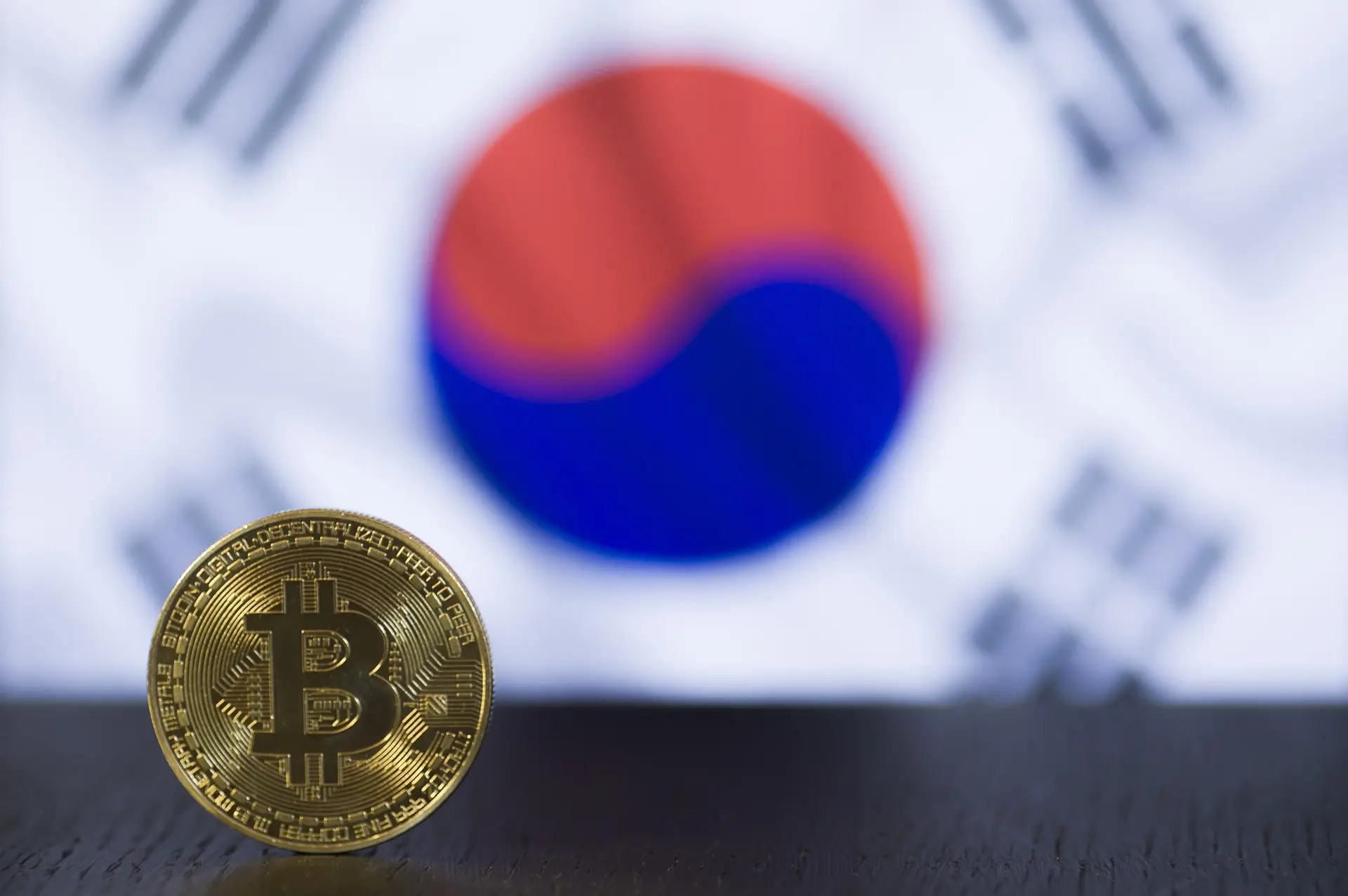
"업비트 바이낸스 트래블룰" (the Upbit-to-Binance Travel Rule) is one of the most searched questions in Korea. On the list Upbit updated on 23 September 2026, Binance, OKX, Bybit, Bitget, Gate, Crypto.com (global) and Backpack are all whitelisted, so deposits and withdrawals of ₩1 million or more can go through. Binance entered Korea through its acquisition of Gopax, which the Korea Financial Intelligence Unit (KoFIU) approved in October 2025.
On the other side, KuCoin, MEXC, Phemex, XT, BingX and others are listed as unregistered (미신고) foreign platforms. Upbit blocks all deposits and withdrawals involving them, whatever the amount. Korean authorities have also blocked access to unregistered platforms and removed their apps from stores.
When you withdraw from Upbit to a whitelisted exchange, you choose the receiving exchange and enter the recipient's details, and the receiving account must be in your own name. Your Upbit account also needs two-channel authentication. Transfers below ₩1 million currently have a lighter flow. Once the threshold goes on 20 February 2027, every exchange-to-exchange transfer will carry Travel Rule data. Transfers abroad and to self-custody will be risk-tiered, and transfers to high-risk counterparties will be banned. That hits hardest anyone used to splitting transfers into ₩990,000 chunks. Structuring like that can itself trigger anti-money-laundering review, and we advise against it.
The tightening shows in the data: withdrawals to overseas exchanges and personal wallets fell to ₩51.7 trillion in the first half of 2026, down 43% in six months. More on the Korean market in our South Korea guide.
No exchange account yet? Sign up and verify your ID first. Matching names make every later transfer simpler.Buy with Visa, Mastercard, Apple Pay or Google Pay
Open account04Sending to your own wallet: self-hosted wallet declarations
When you withdraw to MetaMask, Trust Wallet, imToken or a hardware wallet, there is no receiving exchange to pass data to. Instead, the exchange will usually ask you to declare whether the address is a self-hosted wallet you control.
Platforms handle this differently. Some need only a "this is my wallet" tick box. Others ask you to sign a message in the wallet or send a small test amount. In Korea, Upbit and Bithumb allow withdrawals of ₩1 million or more to personal wallets only to registered, verified addresses. Hong Kong's licensed platforms must carry out due diligence on unhosted wallets.
Pros
- Once declared truthfully, later transfers to the same address are usually faster
- Adding the address to your withdrawal whitelist also protects you if your account is compromised
- Holding larger amounts in a wallet whose keys you control reduces exchange risk
Cons
- The first verification can take extra time
- You cannot declare someone else's address as your own wallet
- A false declaration can get your account restricted
For choosing a wallet and storing a seed phrase, see best crypto wallets and crypto security.
05Why crypto transfers get stuck or returned
Here are the seven most common causes, roughly in order of how often they come up.
1. The receiving exchange is not on the sender's list. The sender cannot find the receiver, or the receiver is unregistered, and the transfer is refused outright. 2. Names do not match. Your name is in Chinese or Korean characters on one side and romanised on the other, or the receiving account belongs to someone else. The Travel Rule needs the beneficiary details to match the receiving account. 3. A missing or wrong memo or tag. The coins reach the exchange's shared address, but the system cannot tell whose account to credit. 4. The wrong network. You send on BEP20 to an exchange that only supports TRC20, and the coins "arrive" somewhere you cannot see.
5. The receiver wants more information. The deposit is held while you explain the source of funds or name the sending exchange, and it stays held until you reply. 6. Your verification level is too low. Some platforms only accept or send transfers above a certain size after advanced KYC. 7. The sender's risk review. A first transfer to a new address, or a sudden jump in size, can trigger manual review.
06Choosing the network, and memos or tags
The same coin can live on several blockchains. USDT exists on TRON (TRC20), Ethereum (ERC20), BNB Smart Chain (BEP20), Solana and others. Sender and receiver must use the same chain. Most withdrawal screens suggest compatible networks when you paste an address, but chains with similar address formats will not stop you choosing wrongly. Ethereum and BNB Smart Chain addresses both start with 0x, for example.
Some coins need a memo or tag: XRP's destination tag, and the memo on XLM, TON, ATOM and others. Exchange deposit addresses for these coins are often shared by many users, so the memo is what identifies your account. Personal wallets usually do not need one; exchanges almost always do.
Withdrawal fees differ a lot by network; see crypto exchange fees. But cost comes second. First, always make sure the receiver supports the chain.
07Seven steps to a safe exchange-to-exchange transfer
- Check that both sides are compliant and available
Look up the sending exchange's list of supported counterparties (such as Upbit's whitelist), and confirm the receiving platform accepts residents of your country.
- Make sure names match
Verify both accounts with your own ID, spelled the same way. Do not send to someone else's account.
- Copy the deposit address and memo on the receiving side
Pick the coin and network on the receiving exchange, then copy the address, plus the memo or tag if the coin uses one.
- Select the same network on the sending side
After pasting the address, check that the network name matches exactly. Add addresses you reuse to your withdrawal whitelist.
- Complete the Travel Rule details
Choose the receiving exchange, or declare a self-hosted wallet, and enter your name and other details as they appear on your ID.
- Send a small test first
For any new address, send a small amount, confirm it arrived, then send the rest.
- Keep the TXID and contact support if needed
Note the transaction hash. If a deposit is held, give the receiving exchange what it asks for, contacting support only through the official app or website.
If you are moving coins so you can turn them back into money in your bank, read the cash-out guide first. Selling directly on a licensed local exchange is often cheaper than shuffling coins around, and triggers fewer reviews.
FAQ
What is the crypto Travel Rule?
The Travel Rule applies Recommendation 16 of the Financial Action Task Force (FATF) to virtual assets. When one exchange sends crypto to another, the sending exchange must pass the originator's and beneficiary's details (such as names and account or wallet addresses) to the receiving exchange. Asian markets adopted it at different times and thresholds: South Korea from March 2022 for transfers of ₩1 million or more, Japan from June 2023 with no threshold at all.
Will a transfer from Upbit to Binance be blocked?
On the list Upbit published on 23 September 2026, Binance is whitelisted for both deposits and withdrawals. Transfers of ₩1 million or more require you to name the receiving exchange and confirm your details. Unregistered offshore platforms such as KuCoin and MEXC are blocked entirely. Korea's Cabinet approved scrapping the ₩1 million threshold in August 2026, with the change applying to all exchange-to-exchange transfers from 20 February 2027.
What should I do if a crypto transfer is stuck or returned?
Find the cause first. The usual ones are a receiving exchange that is not on the sender's list, a beneficiary name that does not match the receiving account, a missing memo or tag, or the wrong network. Contact the receiving exchange's support with the transaction hash (TXID) and supply what they ask for. Returned funds usually come back minus network fees. Ignore third parties offering to "speed up" or unfreeze transfers.
Do I need to declare a withdrawal to my own wallet?
Most regulated exchanges ask you to confirm that the destination is a self-hosted wallet you control, and some ask you to prove it with a signed message or a small test transfer. In South Korea, Upbit and Bithumb allow withdrawals of ₩1 million or more to personal wallets only if the address has been registered and verified. This is a normal compliance step, so answer it truthfully.
What are the Travel Rule thresholds in Hong Kong and Singapore?
Hong Kong has applied the rule under the Anti-Money Laundering and Counter-Terrorist Financing Ordinance since 1 June 2023, with full originator and beneficiary data required at HK$8,000 and above. Singapore's MAS has applied it since January 2020 under Notice PSN02, with a S$1,500 threshold. Smaller transfers may still need some information.
Sources
- FATF — Virtual assets and the Travel Rule · checked Oct 2026
- Upbit — service guide (transfer whitelist) · list dated 23 Sep 2026
- Hong Kong Cap. 615 AMLO · checked Oct 2026
- MAS — Notice PSN02 (AML/CFT for DPT services) · checked Oct 2026
- Korea Financial Intelligence Unit · checked Oct 2026
No account yet? Start with your first coin
Sign up, verify your ID and buy with a card. Later, matching names across accounts makes Travel Rule checks much smoother.
International licensed platform · operating since 2013 · Visa / Mastercard / Apple Pay