
In crypto, "Asia" is not one market but more than a dozen separate rulebooks. Japan has run a registration system for exchanges under its Financial Services Agency for close to a decade. Korea ties each exchange to a single partner bank. Singapore bars licensed platforms from offering retail leverage. Only Hong Kong's 13 SFC-licensed platforms may market to local investors, and mainland China declared crypto trading services illegal financial activity in 2021. The same card and the same app can be legal, grey or unlawful depending on the city you are in.
That is why we write guides by country. Every page is checked against the local regulator's official register and explains which licensed platforms you can use, how to deposit local currency, what tax applies and which scams are most common. The route map and comparison table below are the gateway to all 19 markets.
01The Asia crypto route map
We group the 19 markets into four regional "lines". Solid stops are markets with a lawful way to buy. Dashed stops are places where crypto is banned, tightly restricted or where licensed channels have not opened yet; those pages explain the law and the risks only.
0219 markets compared: legal status, regulator and CEX.IO
The table gives the picture as of October 2026. The CEX.IO column follows the exclusion list on its official support page. Not being excluded only means you can open an account; it does not mean CEX.IO is licensed there. CEX.IO holds no licence from any Asian regulator, and Asian customers are served by its international entity, CEX OVRS LLC, registered in Nevis, without local investor protection.
| Market | Legal status | Regulator | CEX.IO | Guide |
|---|---|---|---|---|
| Hong Kong | Legal, licensing regime | SFC | Supported | Read guide → |
| Singapore | Legal, licensing regime | MAS | Residents not accepted | Read guide → |
| Taiwan | Legal, AML registration | FSC | Supported | Read guide → |
| Japan | Legal, registration regime | FSA (JFSA) | Residents not accepted | Read guide → |
| South Korea | Legal, VASP reporting regime | FSC · KoFIU | Supported, some coins restricted | Read guide → |
| Mainland China | Trading services illegal | PBoC and nine agencies | Some coins restricted · not recommended | Read guide → |
| Malaysia | Legal, registered DAXs | Securities Commission (SC) | Supported | Read guide → |
| Thailand | Legal, licensing regime | Thai SEC | Supported | Read guide → |
| Indonesia | Legal, OJK whitelist | OJK | Supported | Read guide → |
| Philippines | Legal, dual oversight | BSP · SEC | Supported | Read guide → |
| Vietnam | Pilot, no licensee yet | Ministry of Finance · SSC | Not on exclusion list · check local law first | Read guide → |
| Myanmar | Banned | Central Bank of Myanmar | Residents not accepted | Read guide → |
| India | Legal but not legislated | FIU-IND (AML registration) | Residents not accepted | Read guide → |
| Pakistan | Legal, licences pending | PVARA | Supported | Read guide → |
| Bangladesh | Dealing prohibited | Bangladesh Bank | Not on exclusion list · check local law first | Read guide → |
| Bhutan | No lawful on-ramp for residents | Royal Monetary Authority | Not on exclusion list · check local law first | Read guide → |
| UAE | Legal, several regulators | VARA · FSRA · DFSA · CMA | Supported | Read guide → |
| Kazakhstan | Legal, AIFC licensing | AFSA · National Bank | Supported | Read guide → |
| Kyrgyzstan | Legal, VASP licensing | Financial Market Regulation Service | Supported | Read guide → |
Legal status is simplified; see each country page and the regulator's notices for detail.
03East Asia: mature markets, each with its own gate
Hong Kong runs a strict licensing model: only platforms licensed by the Securities and Futures Commission can serve local retail investors, the token menu centres on large caps, and deposits work through local rails such as FPS. Taiwan requires every virtual asset service provider to complete AML registration with the Financial Supervisory Commission, with 11 registered as of 29 September 2026. Its new Virtual Asset Service Act passed its third reading in June 2026 and will turn registration into full licensing.
Japan has 27 FSA-registered crypto exchange service providers. Binance operates locally as Binance Japan, while Bybit has stopped taking new Japanese users. Tax runs up to about 55% today, with a 20% separate tax expected from 2028. In South Korea, Upbit handles roughly 60% of volume, KRW deposits require a real-name account at the exchange's partner bank, and a 22% tax on individual gains is scheduled for 2027. Mainland China is a different world: trading services are illegal financial activity, and our page covers the rules and risks only.
04Southeast Asia: licensed venues alongside P2P
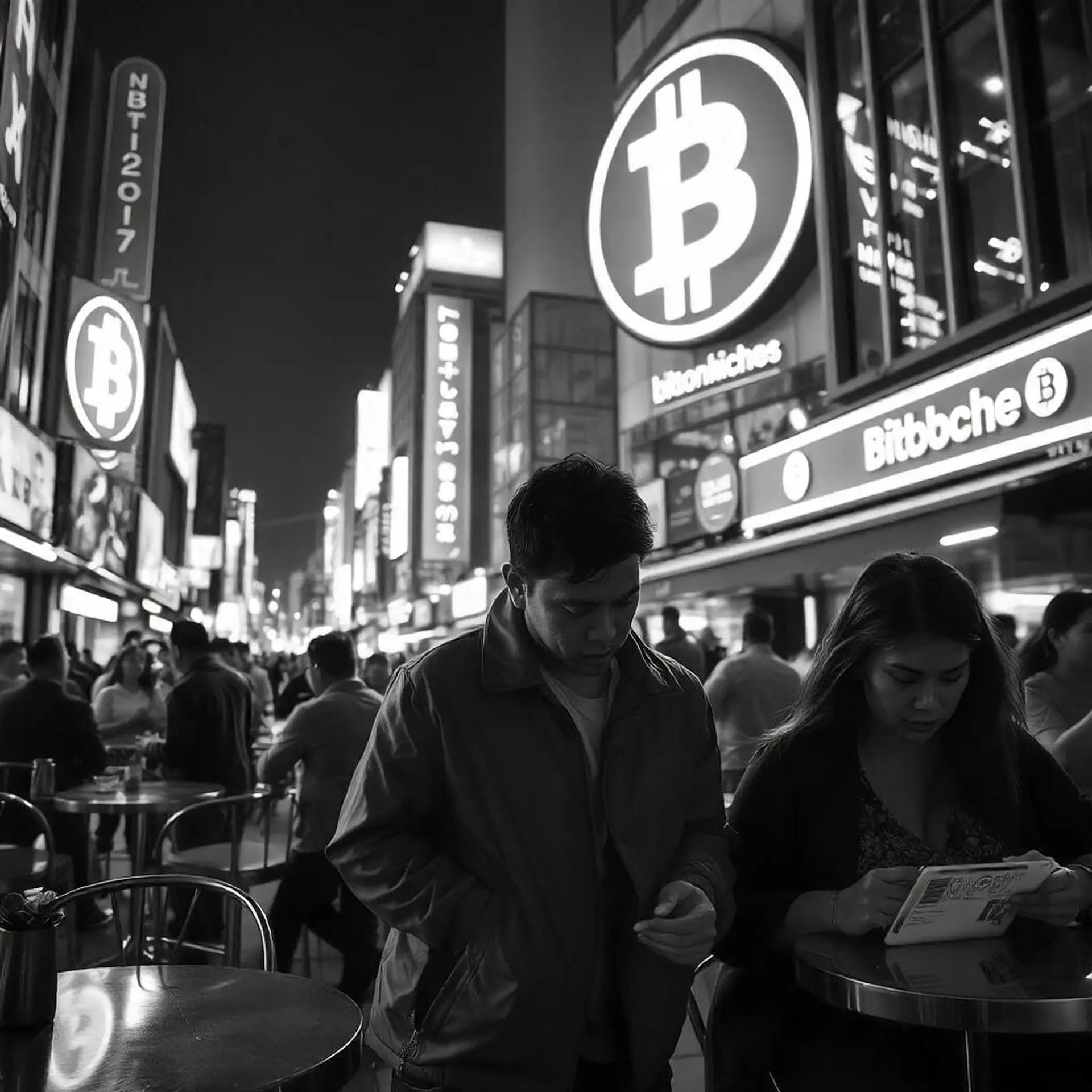
Singapore is licensed by the Monetary Authority of Singapore and has the strictest consumer rules: no local credit cards for crypto, no sign-up bonuses and no retail leverage. Malaysia has just five exchanges registered with the Securities Commission. Thailand's SEC-licensed platforms include Bitkub, Gulf Binance and Upbit Thailand, and since 2025 the regulator has blocked unlicensed venues such as Bybit and OKX.
Indonesia moved crypto oversight from the commodity futures agency to the Financial Services Authority (OJK) in 2025 and publishes a whitelist of licensed platforms. The Philippines splits supervision between the central bank (BSP) and the SEC, and GCash and Coins.ph are many people's first stop. Vietnam's licensed pilot has not opened, yet trading outside licensed providers has been fineable since 1 September 2026. Myanmar's central bank prohibits all crypto transactions.
Is your market on the supported list? Buy your first bitcoin with a card in a few minutes.Not available to residents of Japan, Singapore, India or Myanmar · check local law first
Get started05South Asia: huge user bases, slow legislation
India has one of the world's largest crypto user bases but still no dedicated law. Platforms register with the Financial Intelligence Unit (FIU-IND) for anti-money-laundering purposes, gains are taxed at 30%, and 1% TDS is withheld on each transfer. Pakistan passed its Virtual Assets Act in March 2026, created the Pakistan Virtual Assets Regulatory Authority (PVARA), and its central bank lifted the 2018 banking ban, but no full licence had been granted by October 2026.
Bangladesh's central bank prohibited all virtual-asset dealing in a 2022 foreign-exchange circular. Bhutan's sovereign fund holds bitcoin and tourists can pay in crypto, but residents have no lawful local-currency on-ramp. These pages, too, cover only the law and the risks.
06Central and West Asia: emerging crypto hubs
The UAE has several regulators, including Dubai's Virtual Assets Regulatory Authority (VARA) and Abu Dhabi's ADGM FSRA. Binance, OKX, Bybit and Crypto.com all hold local licences, and individuals pay no income or capital gains tax. Kazakhstan long confined exchanges to the Astana International Financial Centre under AFSA licensing, where Binance Kazakhstan and Bybit Kazakhstan are listed; a late-2025 law opens licensing outside the AIFC under the National Bank. Kyrgyzstan has more than 100 licensed virtual asset service providers and taxes individuals' gains at a flat 10%.
07How to use our country guides
Every country page follows the same structure: a "market passport" (regulator, currency, tax, CEX.IO status), licensed platforms with links to the official registers, local deposit methods, P2P and wallets, fees and limits, tax, and common scams. Hong Kong, Singapore, Taiwan, Japan and South Korea also have a separate "best exchanges" ranking. To compare across borders, see our best crypto exchanges, payment methods by country and crypto tax in Asia.
FAQ
In which Asian countries is it legal to buy crypto?
As of October 2026, residents of Hong Kong, Singapore, Taiwan, Japan, South Korea, Malaysia, Thailand, Indonesia, the Philippines, the UAE, Kazakhstan and Kyrgyzstan can buy and sell crypto through locally licensed or registered platforms. India allows it without dedicated legislation, relying on AML registration. Pakistan passed its Virtual Assets Act 2026 but licences are pending. Mainland China, Bangladesh and Myanmar prohibit it, and Vietnam's licensed pilot has not opened.
Which Asian country makes buying crypto easiest?
It depends on who you are. For residents, the local licensed platforms are usually simplest: Hong Kong has 13 SFC-licensed platforms with FPS deposits, Japan has 27 FSA-registered exchanges, Korea links exchanges to partner banks for KRW deposits, and Thailand even exempts gains on licensed platforms from 2025 to 2029. Where no local option fits, card purchases on international platforms are a common supplement.
Where in Asia can I use CEX.IO?
CEX.IO does not accept residents of Japan, Singapore, India or Myanmar, and some coins are restricted for users in South Korea and mainland China. Hong Kong, Taiwan, Indonesia, the Philippines, Thailand, Malaysia, Pakistan, the UAE, Kazakhstan and Kyrgyzstan are not on its exclusion list. CEX.IO holds no licence from any Asian regulator, so users there are served by its international entity without local investor protection.
Why do some country pages not explain how to buy?
For mainland China, Bangladesh, Myanmar and Bhutan, and for Vietnam while its licensed pilot has not opened, we explain the legal position, the risks and lawful alternatives only. We never describe ways around bans, identity checks or geographic restrictions. That protects readers and is a firm editorial rule.
Sources
- SFC — Lists of virtual asset trading platforms · updated 29 May 2026
- FSA Japan — registered crypto-asset exchange service providers · 1 Sep 2026
- MAS — Financial Institutions Directory · checked Oct 2026
- SC Malaysia — registered digital asset exchanges · updated 20 Jul 2026
- Thai SEC — licence check · checked Oct 2026
- CEX.IO — unsupported countries · checked Oct 2026
Is your market on the supported list?
If you live in a supported country or territory, you can buy your first bitcoin with a card or Apple Pay in minutes. For local-currency deposits, look at your local licensed platforms first.
International licensed platform · operating since 2013 · Visa / Mastercard / Apple Pay