01What P2P crypto is, and why Asia uses so much of it
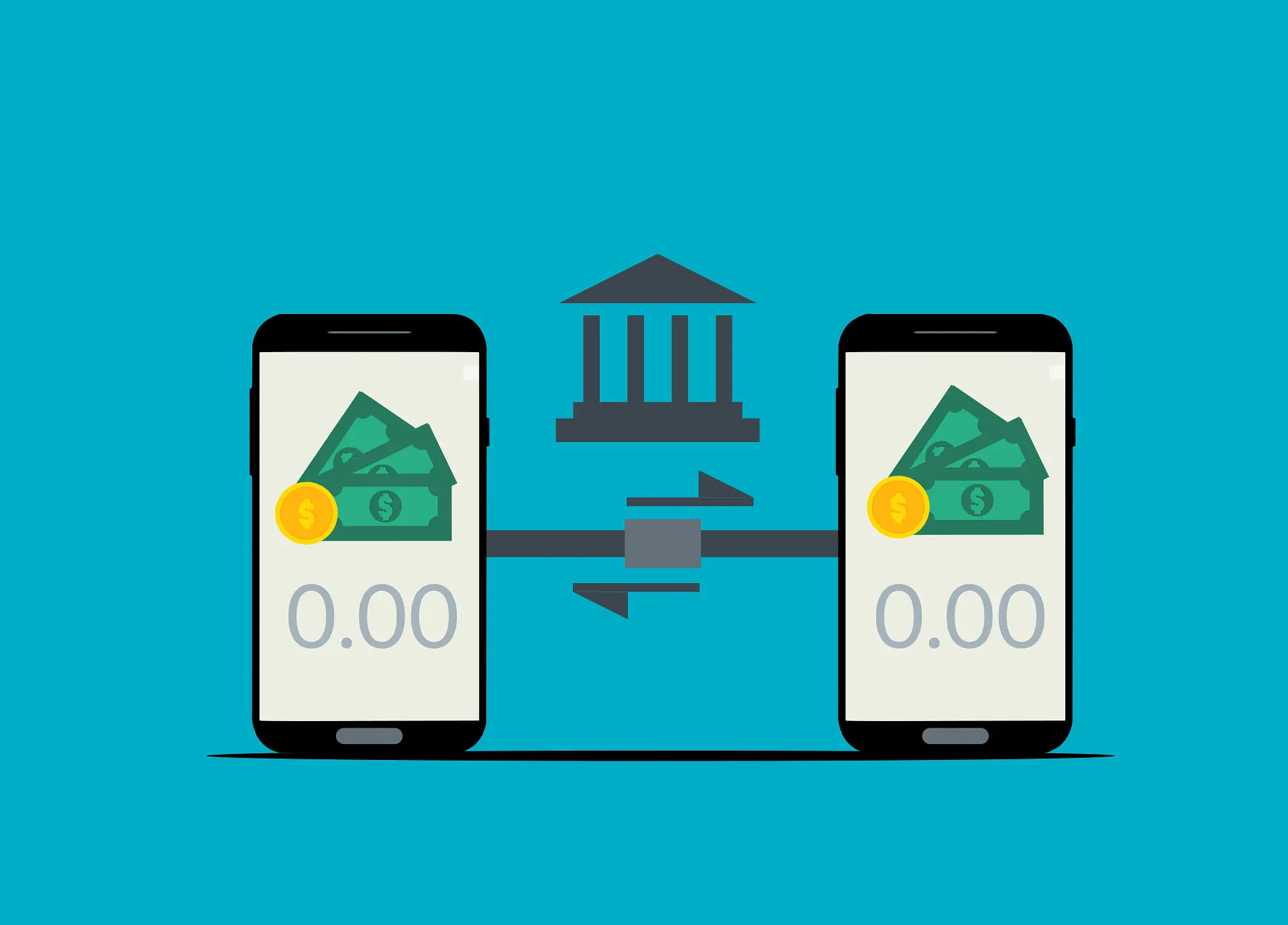
A peer-to-peer (P2P) crypto purchase means you trade directly with another person: you send them local currency, they send you crypto. The exchange is not the seller. It matches you, holds the coins in escrow and settles disputes. Every ad you see in the "P2P" or "C2C" tab of Binance, OKX or Bybit is posted by an individual or a merchant.
P2P is popular in Asia mainly because the bank rails are missing, not because it is cheap. Vietnamese banks do not pay exchanges directly. Pakistan had no bank-to-exchange rupee channel before its 2026 licensing regime began. Binance users in India cannot deposit rupees from a bank. So people pay a P2P merchant with the tools they already use (UPI, Easypaisa, a bank transfer) and get USDT back.
In markets with licensed exchanges and local deposits, such as Japan, South Korea, Thailand, Hong Kong and Singapore, P2P is mostly unnecessary. A bank transfer to the exchange is cheaper and has no counterparty risk. Korean exchanges have no P2P market, and Japan has no legal P2P market at its registered exchanges. So before you go P2P, ask one question: can I pay a licensed local platform by bank transfer instead? See buying crypto by bank transfer.
02How escrow works on a peer-to-peer crypto exchange
Escrow is what lets strangers trust each other. On the big exchanges it is custodial. When you open an order, the seller's coins are locked by the platform. You pay using the details on the order and tap "I have paid". The seller checks that the money has actually arrived, then taps "release", and the coins move from escrow to your account. If the seller never releases, you open an appeal and the platform's support team decides based on the payment evidence.
The other model is multisig escrow, used by Hodl Hodl. Bitcoin sits in a 2-of-3 multisignature address: buyer, seller and platform each hold one key, and any two can move the funds. Hodl Hodl's FAQ says it holds only one of the three keys and never controls user funds alone. If the platform were hacked or shut down, escrowed coins would not vanish with it. The trade-offs are a steeper learning curve and Bitcoin only. Hodl Hodl also runs without KYC by design, which does not make your own country's anti-money-laundering and tax rules go away.
Custodial escrow (Binance / OKX / Bybit P2P)
- Seller's coins locked inside the exchange
- Platform support handles appeals
- Full platform KYC required
- USDT and many other coins
- Exposed if the platform fails
Multisig escrow (Hodl Hodl)
- Coins locked in a 2-of-3 multisig address
- Platform holds only one key
- Bitcoin only
- More technical to use
- A platform failure does not take escrowed coins
Under either model, escrow protects only the crypto side. The fiat side, meaning your bank transfer, is invisible to the platform and outside its control. That is where most P2P risk lives: where the money came from, whether it can be pulled back, and whether police will trace it all happen off-platform.
03P2P platforms as of October 2026
The P2P market has been reshuffled over the past decade. Most early independent platforms are gone, and the action has moved inside the large exchanges.
| Platform | Escrow | Status |
|---|---|---|
| Binance P2P | Custodial | The largest in Asia: VND, INR, PKR, IDR, BDT and more, usually with no taker fee. THB P2P is suspended, and Binance is blocked in the Philippines. p2p.binance.com |
| OKX P2P | Custodial | Active. Not available to Hong Kong residents; blocked in Thailand and the Philippines in 2025. |
| Bybit P2P | Custodial | Active. Hong Kong excluded; blocked in Thailand and the Philippines. |
| LocalBitcoins | — | Closed. Announced the shutdown in February 2023. |
| Paxful | Custodial (was) | Reported to have wound down in 2025. The site blocked our checks, so the status is not confirmed. |
| Noones | Custodial | Founded in 2023 by Paxful co-founder Ray Youssef; focused on Africa and emerging markets. |
| Remitano | Custodial | Long-running P2P market founded by Vietnamese entrepreneurs (Seychelles entity). Hot wallet hacked for about $2.7M in Sept 2023. |
| Hodl Hodl | 2-of-3 multisig | Active. Bitcoin only; the platform does not hold funds. hodlhodl.com |
Statuses come from public reporting and official sites. We could not individually confirm the Paxful, Noones and Remitano details, so check official announcements.
Plenty of people still search for "localcryptos" or "paxful how to buy" because old tutorials keep circulating. Our advice is simple: do not put money on a platform whose status is unclear. If a platform has announced its closure, websites and chat groups still trading under its name are very likely phishing.
Remember too that an exchange's P2P market opening in your browser does not mean it is licensed in your country. We track where offshore exchanges are licensed and where they have been flagged in Is my exchange safe?
04Country realities: same P2P, very different legal consequences
Vietnam: fineable from 1 September 2026
Vietnam's Decree 284/2026/NĐ-CP took effect on 1 September 2026. Individuals who trade crypto outside a licensed provider face fines of VND 30–50 million. The awkward part is that, as of October 2026, no exchange has actually been licensed and opened under the Ministry of Finance pilot. Vietnamese residents trading through offshore venues such as Binance P2P are therefore inside the scope of the fines. We do not publish P2P walkthroughs for Vietnamese residents. The legal position is explained on our Vietnam page.
India: legal, but frozen accounts are the top pain point
Trading crypto is legal in India, with a 30% tax on gains and 1% TDS. Binance has no direct rupee bank deposit there, so INR flows mostly through P2P, mainly UPI and IMPS. The big problem is frozen bank accounts. If money you handled is reported on the national cybercrime system (helpline 1930 / cybercrime.gov.in), police can ask your bank to freeze the whole account, even over ₹1. The Kerala High Court and others ruled in 2026 that liens should be limited to the disputed amount, but practice still varies. On 11 September 2026 the Central Bureau of Investigation (CBI) warned that an above-market offer for USDT "may involve money obtained through fraud". It urged people to use only exchanges registered with FIU-IND, avoid Telegram and WhatsApp P2P, and refuse third-party payments. More on our India page.
Pakistan: Easypaisa and SadaPay dominate
Pakistan passed the Virtual Assets Act in March 2026, and PVARA has issued no-objection certificates (NOCs) to Binance and HTX. As of October 2026 no full licence had been publicly granted, so there is still no direct bank-to-exchange rupee rail. Retail buyers use Binance P2P almost exclusively. In our 1 October snapshot, Easypaisa was the most common payment method in the top 20 ads, followed by bank transfer, SadaPay, NayaPay and Raast, with USDT about 2% above the interbank rate. The State Bank lifted its banking ban for licensed providers in April 2026, but that does not cover individual P2P traders. See our Pakistan page.
Bangladesh: dealing is prohibited
Bangladesh Bank prohibits crypto dealing under foreign-exchange law, and mobile financial services such as bKash and Nagad must not facilitate it. They block linked accounts. Taka ads on Binance P2P do not make it legal. We give no instructions, only the legal position and risks on our Bangladesh page.
Philippines: start with the licensed options inside GCash
Binance has been blocked in the Philippines since 2024, and Bybit and OKX have been flagged or blocked too, pushing P2P into a grey zone. The better route is licensed: GCrypto inside GCash (powered by the licensed exchange PDAX), Coins.ph, or PDAX funded by InstaPay. Fees sit in the spread, but the money moves over rails supervised by the Bangko Sentral ng Pilipinas (BSP). See our Philippines page.
Hong Kong, Taiwan, Malaysia and Thailand carry the same freeze risk. In Hong Kong, AlipayHK and WeChat Pay ban crypto-related transfers. Malaysia and Thailand freeze accounts in anti-mule sweeps. All four have licensed exchanges, so use those first.
Prefer not to send money to strangers? Buy USDT or Bitcoin with a card on a platform that serves your country.You pay the platform directly, not an individual's account
Buy with card05How to choose a P2P merchant
At the same price, who you trade with decides how much risk you take. We check these things, in this order:
1. Verification badge and track record. Prefer merchants the platform has verified, with many orders in the last 30 days, a completion rate above 95% and fast average release times. Treat brand-new accounts with a handful of trades carefully, however good the price.
2. A price that looks too good. When you sell USDT, a bid well above the market is exactly the signal the CBI warned about. The buyer may be laundering fraud proceeds, and the money you receive can be clawed back or get your account frozen. When you buy, a sell ad well below market is just as suspicious.
3. Payment terms. Serious merchants require the paying account's name to match your verified name, and that protects you. Walk away from anyone who asks you to add unusual references, split the payment across different accounts, or pay with gift cards or mobile top-ups.
4. Where you talk. Keep every message in the order chat. If someone moves you to Telegram, WhatsApp or WeChat "for convenience", you will have no evidence when you need to appeal.
06Common P2P scams: fake receipts, triangulation and chargebacks
Fake payment receipts
The buyer taps "paid", sends a doctored screenshot or a fake "credited" SMS, and pressures you to release quickly. The answer is always the same: log in to your own bank or wallet app and check the balance. Release nothing before the money is there. A genuine buyer will not disappear because you took three extra minutes.
Triangulation fraud
This scam freezes more honest people's accounts than any other. The fraudster plays two roles at once. To victim A, they pose as a seller of something (a phone, concert tickets, an "investment"). To you, they are a buyer on a P2P order. They pass your bank details to A, who thinks they are paying for goods but actually pays you. You see real money arrive and release the coins to the fraudster. Days later A realises they were scammed and goes to the police, and the trail leads to your account, not the fraudster's. The fix: the payer's name must match the buyer's verified name on the order. If it does not, refund, cancel and do not release.
Chargebacks and reversals
If someone pays with a method that can be reversed, such as a credit card or PayPal, they can claw the money back days later while you never see the coins again. When selling, accept only irreversible instant transfers.
Fake support and "unfreeze fees"
After a dispute, someone posing as platform support or a "lawyer" offers to unfreeze your account or close the appeal for a deposit. Real support contacts you only through the order page or the official app, and never asks you to send money. More habits in our crypto security guide.
07Six steps to a safe P2P buy (where P2P is legal)
These steps apply only where individuals may legally trade P2P. They are not for residents of Vietnam, Bangladesh or mainland China.
- Check the law and the platform's country list
Find out how your country treats individual P2P trades, and whether the platform accepts residents of your country. Never misstate your residence or use someone else's documents.
- Finish KYC and lock down the account
Verify with your own ID, turn on authenticator-app 2FA and an anti-phishing code, and install the app only from the official site or store.
- Filter merchants and start small
Pick verified merchants with high completion rates and volume. Make your first order small and learn the flow before you scale up. Check order limits and payment methods.
- Pay from your own account, exactly as shown
Pay from a bank or e-wallet in the same name as your exchange account, for the exact amount, and add nothing to the reference the merchant has not asked for. Tap "paid" only after paying.
- Wait for release, or appeal
Wait within the order's time limit. If the seller does not release, do not cancel. Open an appeal from the order page and upload your payment proof.
- Keep records and report for tax
Save the order number, payment record and chat for years. Banks may ask, and tax authorities will. In India you may have to handle P2P TDS yourself.
Once you have the coins, you may want to move USDT to your own wallet or another exchange. Wrong networks and Travel Rule blocks are common, so read transfers and the Travel Rule first. To see whether a P2P premium costs more than exchange fees, run the numbers in our crypto exchange fees guide. For tax, see crypto tax in Asia.
If your country's regulation is just starting, as in Pakistan, watch the regulator's announcements (PVARA). Once licensed exchanges open direct bank deposits, the case for P2P shrinks a lot.
FAQ
Is P2P crypto trading safe?
On a platform with escrow, the main risk is rarely "I paid and got no coins". It is the payment leg: the money a seller receives may come from fraud, which can get bank accounts frozen, or a counterparty may push you to trade off-platform. Keeping all chat on the platform, paying only from an account in your own name and choosing merchants with a long, clean record avoids most problems. In places where P2P is banned or restricted, there is legal risk too.
Are there fees on peer-to-peer crypto exchanges?
Binance P2P usually charges takers no trading fee, but that does not make it free: the merchant builds a premium into the price. On 1 October 2026 we saw USDT quoted about 7% above the mid-market rate in Indian rupees, about 2% in Pakistani rupees and about 3.4% in Bangladeshi taka. Compare the final amount of USDT you receive, not the fee line.
Do LocalBitcoins and Paxful still work?
LocalBitcoins announced its closure in February 2023 and stopped operating. Paxful was reported to have wound down in 2025, but its website blocked our automated checks, so we could not confirm its status independently. Do not leave funds on a platform whose status is unclear. Active alternatives include the P2P markets of Binance, OKX and Bybit, plus Noones, Remitano and the multisig-based Hodl Hodl.
Why was my bank account frozen after a P2P trade?
Usually because money you received was reported as fraud proceeds. In India, police cyber cells can ask banks to freeze an entire account even over a ₹1 transfer; Malaysia, Thailand and Hong Kong also freeze accounts in money-mule crackdowns. Sellers carry the most risk. Trade only with verified, high-completion merchants, refuse third-party payments and keep every record.
Should a beginner use P2P or buy directly on an exchange?
If your country has licensed exchanges with local-currency deposits (Japan, South Korea, Thailand, Hong Kong, Singapore, the Philippines), buying on the exchange by bank transfer is usually cheaper and carries no frozen-account risk. P2P makes more sense where banks cannot fund exchanges directly, as in Pakistan today.
Sources
- Hodl Hodl FAQ — 2-of-3 multisig escrow · checked Oct 2026
- Binance P2P · snapshot 1 Oct 2026
- FIU-IND — compliance orders · checked Oct 2026
- India National Cyber Crime Reporting Portal · checked Oct 2026
- PVARA — Virtual Assets Act 2026 · checked Oct 2026
- LocalBitcoins (Wikipedia) · checked Oct 2026
Rather skip the frozen-account risk?
Buy directly with a card on a platform that serves your country, so your money never passes through a stranger's account.
International licensed platform · operating since 2013 · Visa / Mastercard / Apple Pay