The questions people ask when they first buy Bitcoin in Singapore are rarely "where?" — they are "why was my credit card declined?", "where is the sign-up bonus?" and "why is there a quiz before I can trade?". Every answer leads back to one institution: the Monetary Authority of Singapore (MAS). This guide covers the rules, the payment rails, the licensed platforms, wallets and tax, so your first purchase goes the right way.
The short version: as a Singapore resident, pick a platform you can find in the MAS Financial Institutions Directory, fund it with SGD over PayNow or FAST, and move anything you plan to hold long-term into your own wallet. If you want the ranked list with fees, go straight to our best crypto exchanges in Singapore.
01Singapore crypto at a glance
- Regulator
- Monetary Authority of Singapore (MAS)
- Currency
- Singapore dollar (SGD)
- Key laws
- Payment Services Act 2019; Financial Services and Markets Act 2022, Part 9 (DTSP)
- Licence
- Major or Standard Payment Institution licence for DPT services; about 38 MPI licensees as of Sep 2026
- SGD on-ramp
- PayNow, FAST bank transfer
- Local credit cards
- Not accepted for retail crypto purchases on licensed platforms
- Tax
- No capital gains tax; DPT trades GST-exempt since 2020
- CEX.IO
- Does not accept Singapore residents; not MAS-licensed
Singapore's stance boils down to "welcome the industry, shield the public". Coinbase, Crypto.com, OKX and Gemini all hold licences here, and DBS runs its own digital exchange. At the same time MAS says openly that crypto trading is "highly risky and not suitable for the general public", and it has stacked rules on top of retail accounts to match.
The licence count misleads people. Industry tallies put the number of Major Payment Institution licences for DPT services at about 38 as of September 2026, but many of those firms serve only institutional or accredited investors. Ordinary residents can open accounts at roughly a dozen. So "MAS-licensed" is step one; step two is checking that the platform takes retail customers.
02Five MAS rules every retail buyer runs into
MAS published its Guidelines on Consumer Protection Measures by DPT Service Providers (PS-G03) in September 2024; most of the measures had already taken effect in mid-2024. For an ordinary buyer, five of them matter most.
One: no locally issued credit cards. This is the first "declined" most people see. Licensed platforms may not let retail customers buy DPTs with a credit card issued in Singapore. Debit cards and foreign cards fall outside the ban, but many platforms simply stick to bank transfers. Our credit-card guide explains why card purchases cost more anyway.
Two: no incentives of any kind. Sign-up coins, referral rebates and trading lucky draws — routine marketing elsewhere — are banned, non-monetary perks included. Three: a risk-awareness assessment before onboarding. You will be asked whether you understand volatility and the chance of losing everything; fail it and you cannot trade. Four: no leverage or lending for retail. Margin and derivatives are closed to you. Five: segregated assets held in trust, and a retail customer's coins cannot be staked or lent out.
Earlier still, MAS guideline PS-G02 of January 2022 stopped DPT firms advertising to the public: no ads on public transport, in public places, on social media or through influencers. Physical crypto ATMs went too — operators such as Deodi removed their machines. If you were hoping to buy Bitcoin for cash at an ATM in Singapore, that option is effectively gone; our cash and ATM guide covers where it still exists.
03The June 2025 DTSP rule: the end of "based here, serving elsewhere"
For years, some exchanges incorporated in Singapore but served only overseas customers, sidestepping the local retail regime. That model ended on 30 June 2025. Under Part 9 of the Financial Services and Markets Act 2022, any firm incorporated or operating in Singapore that provides digital token services only to customers abroad now needs a Digital Token Service Provider (DTSP) licence.
In its 6 June 2025 clarification, MAS said it "will generally not issue" such licences, and it gave no transition period. The licence reportedly requires minimum capital of S$250,000 and an annual fee of S$10,000. A wave of offshore-only operations wound down or left.
For you, the lesson is simple: "headquartered in Singapore" no longer means "protected by Singapore" (it never really did). What counts is whether the platform holds an MPI licence covering Singapore customers, and which legal entity you actually sign up with.
04How to buy Bitcoin in Singapore, step by step
On a licensed retail platform, your first Bitcoin purchase usually fits into an afternoon. These steps apply to most of them.
- Look the platform up in the MAS directory
Search the MAS Financial Institutions Directory for the operating company (Coinhako, for example, is run by Hako Technology). Confirm it holds a licence for DPT services, then confirm on its site that it accepts retail customers.
- Sign up and verify with Singpass
Most platforms support Singpass MyInfo, which fills in your identity details far faster than uploading documents. Foreigners living in Singapore usually need a passport and proof of a Singapore address.
- Pass the risk-awareness assessment
MAS makes it mandatory. The questions are not hard, but read them properly — they describe real risks, from sharp price falls to the difficulty of recovering assets if a platform fails.
- Deposit SGD by PayNow or FAST
Use the PayNow UEN/QR or FAST details shown in the app. Deposits are usually instant. Send from an account in your own name, or the transfer may bounce.
- Buy, then decide where to keep it
Place a market or limit order. Keep small, frequently traded balances on the platform; move what you plan to hold for years to a wallet you control.
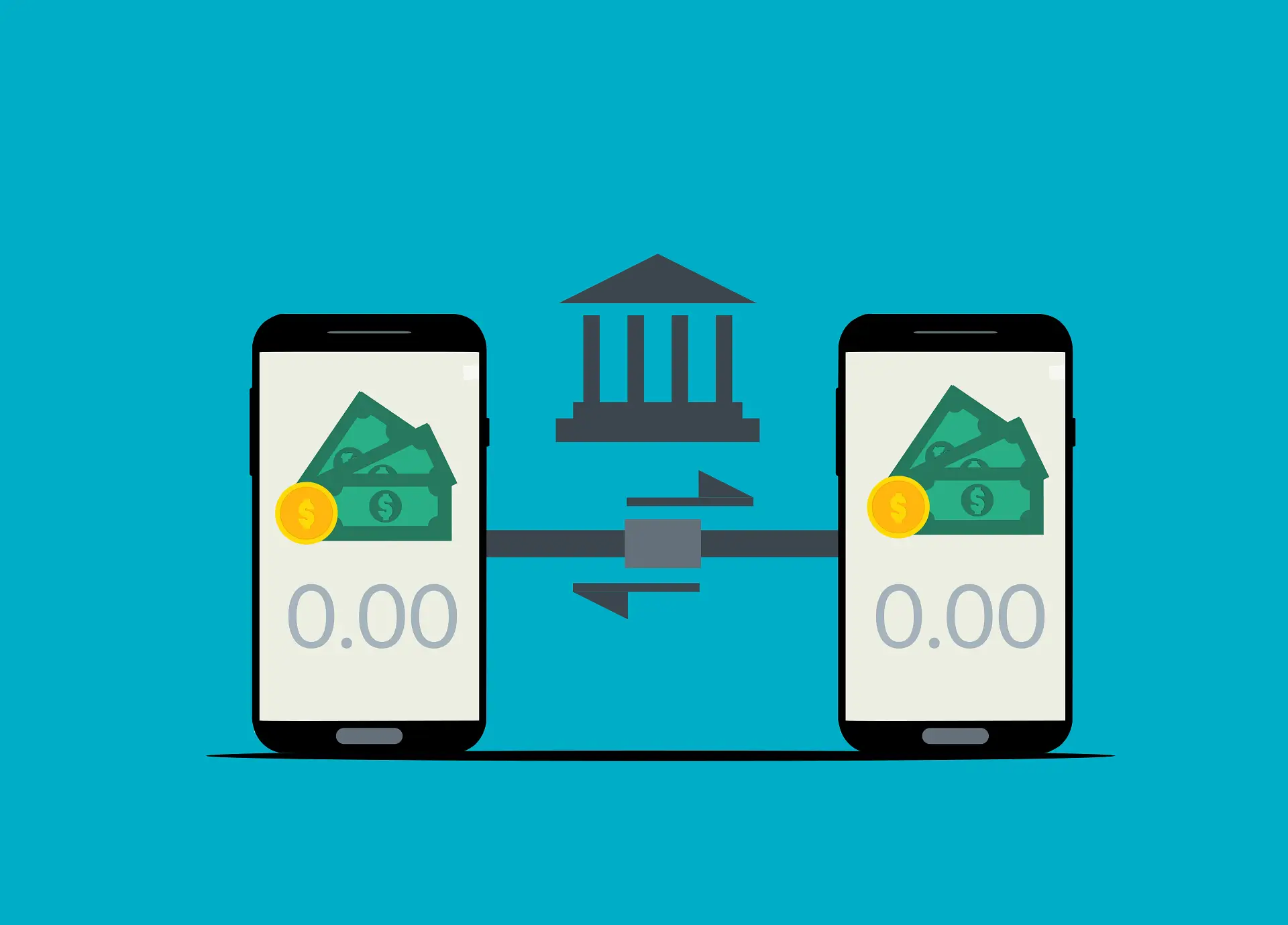
Why PayNow first? It is instant, and Independent Reserve, Coinhako and OKX SG all take PayNow deposits free of charge. Funding Coinhako with GrabPay reportedly costs 2.8%, and a local credit card is not an option at all.
Withdrawals go back over FAST. Independent Reserve charges S$1.50 per FAST withdrawal (up to S$200,000); Coinhako reportedly charges about S$2. For rails in other countries, see crypto payment methods across Asia.
05Choosing a licensed retail platform
Retail platforms in Singapore fall into three groups: home-grown brokers (Coinhako, Independent Reserve), Singapore entities of global exchanges (Coinbase, Crypto.com, OKX SG, Gemini, Upbit SG, Bitstamp), and bank or stablecoin players (DBS Digital Exchange, StraitsX). The table shows the key differences only; full scores, fees and app reviews are in our Singapore exchange ranking.
| Platform | MAS licensee | SGD deposit | Base fee | Official site |
|---|---|---|---|---|
| Independent Reserve | MPI | PayNow free | 0.5% (falls with volume) | independentreserve.com |
| Coinhako | MPI (Hako Technology) | PayNow / FAST free | Reportedly 0.6% | coinhako.com |
| OKX SG | MPI | PayNow / FAST free | Check fee page | okx.com/en-sg |
| Coinbase | MPI (Coinbase Singapore) | Bank transfer | Spread + fee; check | coinbase.com |
| Crypto.com | MPI (Foris DAX Asia) | PayNow / FAST | App spread | crypto.com |
As of October 2026. Only Independent Reserve's fees were verified on the official page; check the others on each platform's fee page.
Local brokers
- Simple apps, smooth PayNow funding
- Coinhako has 400k+ registered Singapore users
- Fewer coins; prices quoted by liquidity providers
- Good for small, regular buys
Global exchanges’ SG entities
- More coins and deeper order books
- Familiar brands, feature-rich apps
- Some features switched off for Singapore
- Better once you know what you are doing
If you want a Singapore-dollar stablecoin, StraitsX issues XSGD, holds MPI licences and lets you mint via PayNow. DBS Digital Exchange (DDEx), despite being run by Singapore's biggest bank, is open only to institutional and accredited investors — ordinary depositors cannot use it.
06The Tokenize lesson: "licence pending" is not a licence
2025 taught Singapore's crypto users a hard lesson. Tokenize Xchange was a well-known local exchange that operated for years as a licence applicant. On 4 July 2025 MAS rejected its application; the platform stopped operating on 30 September 2025, its operator AmazingTech went into interim judicial management and was ordered wound up in October, and its founder was charged with fraudulent trading. A judicial administrator's report put customer liabilities at about S$266 million against roughly S$2.6 million in assets.
Before that, in 2022, Hodlnaut and Zipmex froze withdrawals and Singapore-based Three Arrows Capital collapsed. The common thread: users read "operating in Singapore" as "protected by Singapore".
For a full framework on judging whether an exchange is safe, read exchange safety and licences.
07Where to keep it: wallets Singapore users pick
Custodial balances on a licensed platform sit under MAS segregation-and-trust rules, which is fine for money you use often. Once you plan to hold for years — or the amount would cost you sleep if it vanished — a self-custody wallet makes sense.
Common choices in Singapore are software wallets such as MetaMask and Trust Wallet, hardware wallets from Ledger and Trezor, and the StraitsX wallet for XSGD. Two wallets popular with Chinese-speaking users, imToken and TokenPocket, are themselves headquartered in Singapore. We compare them in best crypto wallets and hardware wallets.
When you withdraw from a Singapore platform to a personal wallet, expect to prove the wallet is yours — a signed message or a small test transfer. That is the anti-money-laundering Travel Rule at work; see transfers and the Travel Rule.
08Crypto tax in Singapore
Singapore has no capital gains tax. If you hold Bitcoin as a long-term investment and sell at a profit, you generally owe nothing. IRAS looks at substance, though: frequent trades, short holding periods and an intent to profit from price moves can make your gains taxable business income. Mining, staking rewards and salary or sales paid in crypto are taxable as income too.
On the indirect side, buying and selling digital payment tokens has been GST-exempt since 1 January 2020 (see the IRAS page). Singapore has also committed to the OECD Crypto-Asset Reporting Framework (CARF), with exchange reporting expected to begin around 2027 — so keep clean records from day one. For a regional comparison, see crypto tax in Asia.
Visiting Singapore but resident in a supported country? You can buy crypto with Visa, Mastercard or Apple Pay on an international platform.Not available to Singapore residents
Get startedBeyond Singapore, readers often compare Hong Kong, Malaysia and Thailand. The rules differ sharply, so check before you travel or move.
FAQ
Is it legal to buy Bitcoin in Singapore?
Yes. Singapore treats Bitcoin and other cryptocurrencies as "digital payment tokens" (DPTs). Individuals may buy, hold and trade them, though they are not legal tender. Any platform offering DPT services must be licensed by the Monetary Authority of Singapore (MAS) under the Payment Services Act 2019. MAS has repeatedly warned that crypto trading is highly risky and not suitable for the general public.
Can I buy crypto with a credit card in Singapore?
Not with a locally issued credit card on a MAS-licensed platform if you are a retail customer: MAS consumer-protection guidelines ban it. The standard route is a PayNow or FAST bank transfer in SGD, which is usually instant and free on the main platforms. Debit cards and foreign-issued cards are outside that ban, but whether a given platform accepts them varies.
Do I pay tax on crypto gains in Singapore?
Usually not, if you are a long-term investor: Singapore has no capital gains tax. IRAS can treat gains as taxable income if your activity looks like a trading business, judged on frequency, holding period and intent. Mining, staking rewards and being paid in crypto are taxable income. Buying and selling digital payment tokens has been exempt from GST since 1 January 2020.
Can Singapore residents use Binance or Bybit?
In practice, no. Binance.com withdrew from Singapore in 2021–22, stopped serving Singapore users and is on the MAS Investor Alert List. Bybit moved its headquarters to Dubai in 2023 and holds no licence to serve Singapore retail customers. Residents should use a MAS-licensed platform such as Coinbase, Crypto.com, OKX SG, Coinhako or Independent Reserve.
Why do Singapore exchanges have no sign-up bonus and a risk quiz?
Because MAS requires it. Under guidelines PS-G03 (2024), licensed platforms may not give retail customers any monetary or non-monetary incentive, including referral rewards. They must run a risk-awareness assessment before onboarding, may not offer retail leverage or lending, and must hold customer assets in trust. A "sign-up bonus" aimed at Singapore users is therefore a red flag.
Sources
- MAS Financial Institutions Directory · checked Oct 2026
- MAS Guidelines PS-G03 — consumer protection measures by DPT service providers · issued Sep 2024
- MAS clarifies regulatory regime for digital token service providers · 6 Jun 2025
- IRAS — GST on digital payment tokens · checked Oct 2026
- Independent Reserve Singapore — fees · checked 1 Oct 2026
- CEX.IO — countries and territories not currently supported · checked 1 Oct 2026
Not a Singapore resident?
If you live in a supported country and are only visiting Singapore, you can buy crypto with a card on an international platform. Singapore residents should use a MAS-licensed platform.
International licensed platform · operating since 2013 · Visa / Mastercard / Apple Pay