Buying crypto in Asia? Pick the right route before the platform
Hong Kong runs on FPS, Singapore on PayNow, Thailand on SEC licences, and Japan only trusts firms on the FSA register. Every market buys crypto differently. We check the regulator lists country by country and test exchanges, wallets and payment methods, so your first Bitcoin costs less and lands safely.
Where are you buying from?
- ✓ No paid rankings
- ✓ Regulator lists checked monthly
- ✓ Official sources only

01Buying crypto for the first time? It takes three steps
What stops most people from buying their first Bitcoin is rarely the choice of coin. It is the jargon: KYC, maker, taker, network, address, seed phrase. Strip that away and the process looks the same whether you live in Hong Kong, Tokyo or Kuala Lumpur. Only the first step deserves real thought: choosing a platform that is legal where you live and takes your home currency.
- Pick a platform and verify your identity
Have your passport or national ID, a phone number and a selfie ready. Every compliant platform runs KYC, which normally takes a few minutes to a day. Before anything else, confirm the platform accepts residents of your country.
- Deposit your local currency or use a card
Local instant transfers (FPS, PayNow, PromptPay, UPI and so on) are the cheapest. Cards and Apple Pay are the fastest but usually cost an extra 1.5% to 4%. A small test deposit the first time is a smart habit.
- Buy, then decide where it lives
Place your order for Bitcoin, Ether or USDT. Small amounts can sit on the exchange for a while; as the sum grows, move it to a wallet whose keys you control, and write the seed phrase on paper, stored offline.
Want to try the whole process with a small amount first? A card purchase takes a few minutes.Visa, Mastercard, Apple Pay and Google Pay accepted
Buy your first coinIf you want the long version with screenshots of each screen, our step-by-step guide on how to buy crypto covers it, and how to buy Bitcoin goes deeper on order types, minimums and the cheapest routes for BTC specifically.
The Asia crypto route map
We split the region into four "lines". Solid stops are markets where you can buy crypto legally; dashed stops are places where crypto is restricted or banned, and there we only explain the law as it stands — never how to get around it.
Find the answer you need
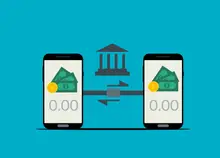
From your very first purchase to choosing a wallet, comparing fees and cashing out to your bank, each question has its own in-depth guide.
Buying from scratch
Exchanges & platforms
Payment methods & cards
Practical guides

02The best crypto exchanges for users in Asia
These are the international platforms we see Asian users rely on most, scored on licensing transparency, real costs, availability across the region, and the quality of the website and app. One caveat matters more than any score: a platform that opens in your country is not necessarily licensed in your country. Where a local licensed exchange exists — bitFlyer or GMO Coin in Japan, Upbit in Korea, Bitkub in Thailand, OSL or HashKey in Hong Kong — it should usually be your first stop for home-currency deposits. Local rankings live on each country page.
- Editor's pick for card purchases
CEX.IOFounded 2013 · London
One of the longest-running exchanges, with a clear sign-up flow and direct purchases by Visa, Mastercard, Apple Pay and Google Pay. A good fit if you want to buy your first Bitcoin with a bank card quickly. In the US it is a FinCEN-registered money services business with money-transmitter licences in 30+ states.
- Spot 0.15% / 0.25%
- Fiat USD · EUR · GBP
- PCI DSS Level 1
- Not for residents of Japan, Singapore, India
-
BinanceLargest by global volume
Unmatched coin choice and liquidity, plus a P2P market that covers the Vietnamese dong, Philippine peso, Indonesian rupiah, rupee and many other Asian currencies. Its licensing varies wildly by country: Binance Japan in Japan, Gulf Binance in Thailand, and blocked in the Philippines.
- Spot 0.10% / 0.10%
- P2P taker fee: zero
- Local entities in Japan · Thailand · Kazakhstan
-
OKXExchange + Web3 wallet
The cleanest pro trading screen in its class, and a built-in self-custody Web3 wallet that is popular with Chinese-speaking users. It runs OKJ in Japan, holds a MAS licence in Singapore and a VARA licence in Dubai; it withdrew its Hong Kong application in 2024 and was blocked in Thailand and the Philippines in 2025.
- Spot 0.08% / 0.10%
- Built-in Web3 wallet
- Singapore · Dubai · Japan entities
-
KrakenLongest clean security record
Has never lost client funds to a hack and has published audited proof of reserves for years. The catch for Asia: few local-currency deposit options. It left Japan in 2023 and was named on the Philippine SEC list of unregistered platforms in 2025.
- Instant buy fee 1%
- Audited proof of reserves
- Exited Japan
-
CoinbaseUS-listed company
The most beginner-friendly interface we know, a MAS licence in Singapore, and rupee deposits in India since 2026. Pricing is the weak spot: spread plus card fee in the simple buy mode can approach 4%.
- Friendliest for beginners
- MAS licence in Singapore
- Simple buy is pricey
-
BybitHeadquartered in Dubai
Suffered the largest exchange hack on record in February 2025 (about $1.4 billion) and closed the gap within 72 hours. It holds the first platform licence from the UAE CMA, but has stopped new sign-ups in Japan and is blocked in Thailand and the Philippines.
- Spot 0.10% / 0.10%
- Licensed in the UAE
- Unavailable in Japan · Thailand · Philippines
-
Crypto.comApp + Visa card
A polished app and a Visa crypto card you can apply for in Singapore and elsewhere; card purchases cost about 2.99%. Licensed by MAS in Singapore and VARA in Dubai, and still a "deemed licensed" applicant in Hong Kong.
- Card buys ~2.99%
- Visa crypto card
- Licensed in Singapore · Dubai
How we score: see our methodology. Fees shown are base tiers and change often — the platform's own fee page is always the final word. For the full comparison and more platforms, see best crypto exchanges.
03How you pay: what five funding methods really cost
Buy $1,000 of Bitcoin with the wrong payment method and you can easily hand over an extra $30 or $40 for nothing. Below are the five ways people across Asia most often fund a purchase. The numbers are typical ranges; your platform and card issuer set the final price.
| Method | Typical cost | Speed | Who it suits · what to watch |
|---|---|---|---|
| Local instant transfer | 0%–0.5% | Minutes | FPS in Hong Kong, PayNow in Singapore, PromptPay in Thailand, UPI in India, DuitNow in Malaysia. Cheapest by far, but only offered by local licensed platforms. Bank transfer guide → |
| Debit card | 1.5%–3.5% | Instant | Approved more often than credit cards and never treated as a cash advance. Buy with a debit card → |
| Credit card | 2%–5% | Instant | Some banks add a cash-advance fee or decline outright; Singapore-licensed platforms may not accept local credit cards. Buy with a credit card → |
| Apple Pay / Google Pay | Same as card | Instant | Really just the card behind it, with the smoothest experience on a phone. Buy with Apple Pay → |
| P2P trade | 0% (spread extra) | 10–30 min | The default in Vietnam, the Philippines and Pakistan, but carries a real risk of frozen bank accounts. P2P guide → |
Two habits save more money than any promo code. First, compare the total you pay, not the headline fee: a "zero-fee" buy screen often hides a 1–2% spread in the price. Second, if your country has a licensed local venue with instant bank transfers, use it for the bulk of your deposits and keep cards for small or urgent purchases. Our crypto exchange fees guide shows how to read a fee schedule, and payment methods by country lists every local rail we have checked.
04Where to keep it: quick wallet UX scores
When we rate a wallet, we care less about how many chains it supports and more about whether an ordinary person can do three things without a mistake: back up the seed phrase, receive a payment and send funds to someone else. These four are the wallets Asian readers ask about most, scored from our own use on iPhone and Android.
MetaMaskmetamask.io ↗
The de facto standard for Ethereum. Superb as a browser extension; the mobile app is a little intimidating for beginners.
Trust Wallettrustwallet.com ↗
Binance-owned, supports 100+ chains and has the largest following in Southeast and South Asia.
imTokentoken.im ↗
Founded in Hangzhou in 2016, now headquartered in Singapore; the go-to for Chinese-speaking users holding USDT on TRON.
Ledger Nano Xledger.com ↗
Hardware cold wallet at $99. Keys stay offline, which makes it the right home for larger long-term holdings.
For the full comparison, read best crypto wallets and our hardware wallet comparison. And one rule to tattoo on your memory: anyone who asks for your seed phrase — including someone claiming to be "support" — is running a scam.
05How Asia actually buys crypto: the five patterns we see
After researching 19 markets, one thing is clear: "Asia" is not a single crypto market. Regulators, banks and payment habits differ so much that the same person could buy crypto in two completely different ways in two cities a short flight apart. Broadly, the region sorts into five patterns.
Pattern 1: licensed local exchanges dominate (Japan, Korea, Taiwan, Thailand)
These markets have mature registration or licensing regimes, and local exchanges plug straight into the banking system. Japan's Financial Services Agency lists 27 registered providers, and the Japan Virtual and Crypto Assets Exchange Association counted 14.28 million accounts in July 2026. Korea is more concentrated still: Upbit alone handles roughly six in ten trades, and users can only deposit won through a real-name account at a partner bank. International platforms are rarely the first choice here — Japanese residents cannot open new Bybit accounts, and Korean exchanges block withdrawals to unregistered offshore venues. Thailand steers users with tax policy instead: from 2025 to 2029, gains on crypto sold through a Thai SEC-licensed platform are exempt from personal income tax.
Pattern 2: strict licensing, limited retail access (Hong Kong, Singapore)
Asia's two big financial centres are also its most protective of retail investors. By May 2026 Hong Kong's Securities and Futures Commission had issued 13 virtual asset trading platform licences, and the list of coins retail clients may trade is short. The Monetary Authority of Singapore makes licensed platforms run risk-awareness assessments, bans incentives and forbids accepting locally issued credit cards. The upside is that someone is accountable when things go wrong; the price is less choice.
Pattern 3: heavy tax, huge activity (India)
India topped the Chainalysis 2025 Global Crypto Adoption Index, yet gains are taxed at 30%, every sale has 1% TDS withheld, and losses cannot be offset. The predictable result is that volume leaks offshore: a parliamentary committee report put the offshore share at about 91.5% of trading in fiscal 2024–25. In India, choosing a platform registered with the Financial Intelligence Unit (FIU-IND) is the bare minimum of self-protection. Details are in our India guide.
Pattern 4: P2P and stablecoins rule (Vietnam, the Philippines, Pakistan)
Where bank rails are patchy or regulation has not yet landed, people solve the problem with P2P markets and USDT. Vietnam trades at global-top volumes, but its licensed-exchange pilot has not opened for business, and since 1 September 2026 residents trading outside licensed providers can be fined. In the Philippines, GCash has GCrypto built in and Coins.ph has more than 16 million users. Pakistan passed its Virtual Assets Act in 2026, but licences are still being processed, so retail users mostly trade P2P through e-wallets such as Easypaisa and SadaPay.
Pattern 5: restricted or banned (mainland China, Bangladesh, Myanmar, Bhutan)
A 2021 notice from the People's Bank of China and nine other agencies classified crypto-trading business as illegal financial activity. Bangladesh Bank does not permit crypto trading; the Central Bank of Myanmar bans holding and trading; residents of Bhutan cannot legally buy crypto with ngultrum, even though the state's own investment arm holds Bitcoin. For these places we explain the legal position and the risks — and nothing about workarounds. See, for example, our page on crypto in China.
06Six things we check before recommending a platform
To review an exchange, we walk through the full journey on both a computer and a phone: sign-up, identity check, deposit, purchase and withdrawal to our own wallet. Then we score it on six dimensions — the weights are published on our methodology page.
One: is the licence real and verifiable? We only trust registers published by regulators — the SFC's list of licensed platforms, the Japanese FSA's register of crypto-asset exchange providers, the VARA public register in Dubai — never a platform's own "licensed worldwide" banner. Two: is it legal and available where you live? Many international platforms explicitly refuse residents of certain countries, and misstating your residence at sign-up can get an account frozen. Three: what does it really cost? We add trading fees, spread, deposit charges and withdrawal fees together rather than trusting a "zero fees" landing page.
Four: how safe are the assets? Cold-storage share, whether proof of reserves is published, any history of hacks and — crucially — how the platform handled them. Five: website and app experience. A badly placed button can turn a beginner's "sell" into a "buy", so we note every spot in the order flow where mistakes come easily. Six: support and withdrawals. "Easy in, hard out" is a classic complaint, so we test how cash-outs actually work and what the platform documents about timing. If you want the safety side in depth, our guide to exchange safety and licensing walks through each check.
07What if an exchange collapses or gets hacked?
"Is Binance going to fail?" and "Is this exchange a scam?" are among the questions we receive most often. History has given real lessons. In 2014 Tokyo-based Mt.Gox lost around 850,000 Bitcoin. In 2021 Turkey's Thodex vanished with roughly $2 billion. FTX went bankrupt in 2022. In 2024 Japan's DMM Bitcoin lost 4,502.9 BTC to hackers and wound down, and India's WazirX lost around $235 million the same year. In 2025 Bybit lost about $1.4 billion in Ether.
The endings were not the same, though. Because Japan requires exchanges to segregate customer assets, FTX Japan's users got their money back and DMM Bitcoin's accounts were transferred to SBI VC Trade. Bybit covered its shortfall from its own funds within 72 hours. Thodex customers, by contrast, are still waiting. The difference comes down to regulation and asset segregation. Our exchange safety guide shows how to verify a licence, how to read proof of reserves, and why proof of reserves alone does not mean an exchange cannot fail.
Whatever platform you use, keep the keys to your account security in your own hands: turn on two-factor authentication (an authenticator app beats SMS), set up a withdrawal allow-list, and never type your seed phrase into any website. More practical steps are in our crypto security guide, and if you are new to all of this, the beginner's guide is the gentlest place to start.
Frequently asked questions
What is the easiest way to buy Bitcoin in Asia?
For most people the simplest route is to sign up with a regulated exchange, complete the identity check (KYC), fund the account by card, Apple Pay or a local bank transfer, and buy Bitcoin directly. Cards settle in minutes but cost more; local rails such as FPS in Hong Kong, PayNow in Singapore or PromptPay in Thailand are cheaper. Which platforms you can use depends on where you live, so start with your country guide.
What is the smallest amount of Bitcoin I can buy?
Bitcoin divides down to 0.00000001 BTC (one satoshi), so you never need to buy a whole coin. Most exchanges set a minimum order of roughly 1 to 10 US dollars, and local exchanges in Japan and Korea accept orders worth a few hundred yen or a few thousand won. Small, regular purchases work well, but watch fixed fees, which eat a larger share of a small order.
Is it safe to buy crypto with a credit card? Will my bank block it?
Buying with a credit card on a reputable platform is safe in itself, but keep three things in mind. Fees are usually higher than a bank transfer. Some banks treat crypto purchases as cash advances, charging an extra fee or declining the payment. And in Singapore, licensed platforms may not accept locally issued credit cards at all. Debit cards tend to go through more reliably.
Should I use a local licensed exchange or an international one?
Local licensed exchanges, such as JFSA-registered firms in Japan, SFC-licensed platforms in Hong Kong or SEC-licensed exchanges in Thailand, sit under local law, accept your home currency and sometimes carry tax advantages. International platforms list more coins and features but are usually not supervised in your country. Our rule of thumb: use a local licensed venue for home-currency deposits and an international one for specific coins or life abroad, after confirming it accepts residents of your country.
Does BuyCrypto.asia give investment advice?
No. We are an independent information site. We compare platforms, explain rules and walk through processes, but we never tell you which coin to buy or when. Crypto assets are extremely volatile, so only put in money you can afford to lose entirely.
Ready? Start with a small amount
Sign-up and verification take a few minutes. After that you can buy Bitcoin, Ether and USDT with a bank card or Apple Pay. Check first that the platform serves your country.
International licensed platform · operating since 2013 · Visa / Mastercard / Apple Pay