
How you buy crypto depends far more on where you live than on what you buy. Take a $100 Bitcoin purchase. An office worker in Taipei who sends Taiwan dollars to a local exchange may pay well under a dollar in costs. A student in Kuala Lumpur who uses a credit card on an offshore app can lose $4–5, and the bank may treat the payment as a cash advance on top. The coin is the same. The channel is what costs money.
This page is our hub. It lays out the five routes and their trade-offs, tells you where to start in each Asian market, then walks through six steps and a checklist for your first purchase. If you only want Bitcoin, jump to how to buy Bitcoin. For stablecoins, see how to buy USDT.
01The five ways to buy crypto, and what each costs you
1. A licensed local exchange, funded in local currency
For most readers in Asia this is the cheapest route and the one with real legal protection. Exchanges registered with Japan's Financial Services Agency (JFSA), licensed by Hong Kong's Securities and Futures Commission (SFC) or the Thai SEC, or registered with Taiwan's FSC all connect directly to local banks. That means FPS in Hong Kong, PayNow in Singapore, PromptPay in Thailand, FPX in Malaysia and UPI in India. Deposits are often free, and order-book trading fees typically sit between 0.05% and 0.25%.
The catch: fewer coins, and you need local ID and a local bank account. Also learn the difference between the order book and "simple buy". Japan's hanbaijo (dealer) desks advertise zero fees, but Coincheck itself discloses spreads of 0.1–5.0%, higher on some coins.
2. An international exchange
Binance, OKX, Coinbase and Kraken offer more coins and deeper markets, which matters if you want a specific asset or live abroad. But being able to sign up is not the same as being legal where you are. The Thai SEC blocked Bybit and OKX in 2025, the Philippines has blocked Binance since 2024, and Indonesia's OJK has halted 228 unlicensed platforms including Binance and Coinbase. Check an international platform's status in your country before you deposit.
3. Debit or credit card, Apple Pay and Google Pay
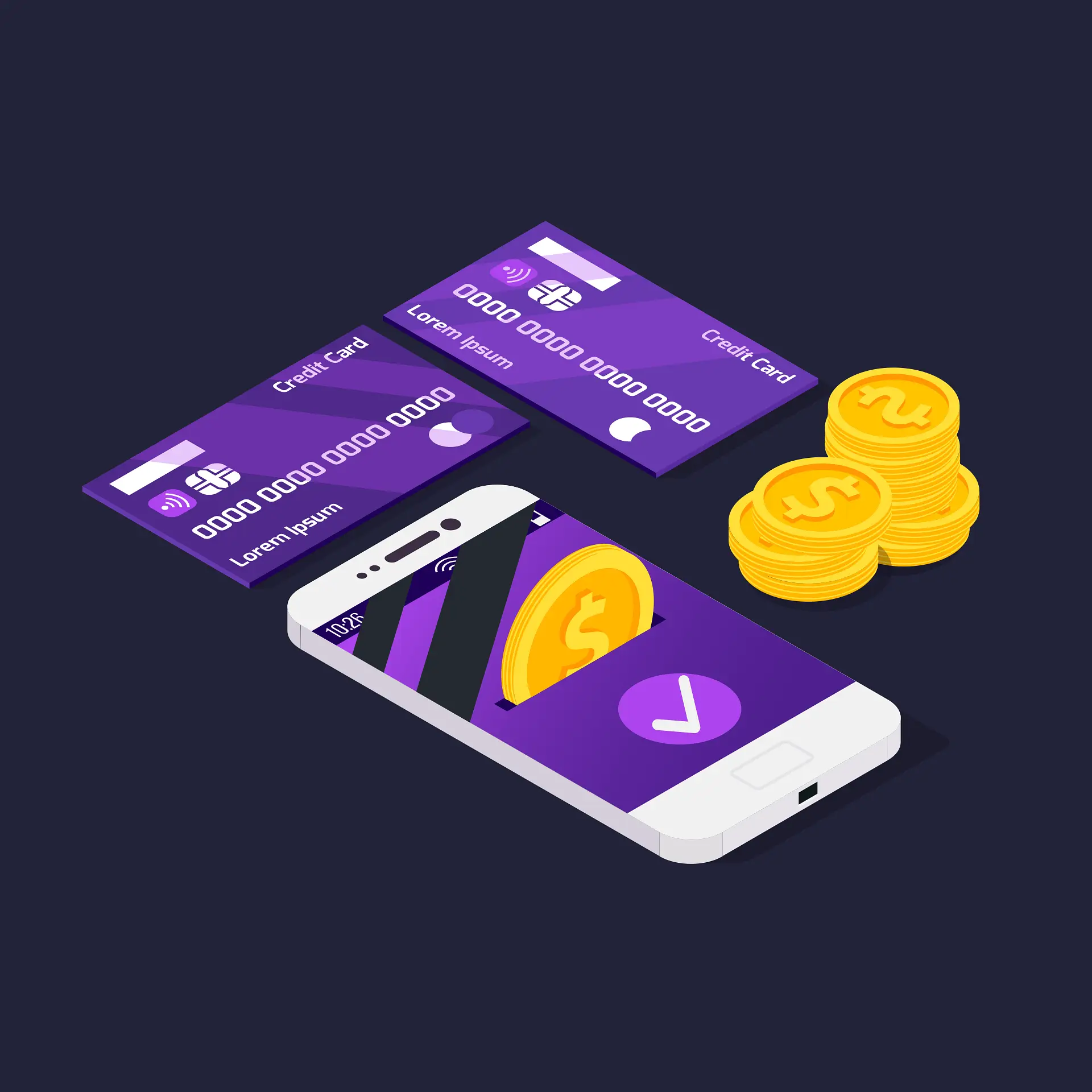
Cards are the fastest way to buy crypto online. The whole thing takes minutes, which is why cards suit a first small purchase. They are also expensive. Card fees of 2–5% are normal, and platforms that settle in USD, EUR or GBP add your bank's foreign-exchange charge. Singapore bans licensed platforms from accepting locally issued credit cards for crypto, and Korean card issuers have refused crypto purchases since 2018. More in our guides to buying crypto with a credit card and Apple Pay.
4. Bank transfer, including international wires
If the platform supports your currency, a domestic transfer is the cheapest way in. If it only takes USD by SWIFT wire, the fixed fees make small deposits poor value. See buying crypto with a bank transfer.
5. Peer-to-peer (P2P)
Where bank access is patchy, as in Pakistan, Vietnam and Bangladesh, P2P is how many people actually buy. You pay a seller directly in local currency while the platform holds the seller's coins in escrow, and the coins are released once the seller confirms payment. Price and risk are the problems. When we checked Binance P2P on 1 October 2026, USDT was quoted at about Rs 102.8 in India, roughly 7% over the mid-market rate. Pakistan's premium was about 2%. The bigger danger is receiving money linked to fraud, which can get your whole bank account frozen. Rules and red flags are in our P2P guide.
02Where to start, by country
This table is a starting point built from our research on 19 markets. The rule of thumb: if a licensed local platform and a local-currency transfer are available, use them first. Each country name links to a full guide covering licences, fees and tax.
| Market | Licensed local platforms (regulator) | Usual funding | Worth knowing |
|---|---|---|---|
| Hong Kong | 13 SFC-licensed VATPs, e.g. OSL, HashKey; ZA Bank and Futu route through licensed venues | FPS, eDDA, bank transfer | Small retail coin list; CEX.IO accepts residents but is not SFC-licensed |
| Singapore | MAS licensees: Coinbase, OKX SG, Coinhako, Independent Reserve and others | PayNow, FAST | No locally issued credit cards; CEX.IO does not accept residents |
| Taiwan | 11 FSC AML-registered VASPs, e.g. MAX, BitoPro | Bank transfer, convenience stores (BitoEX) | Virtual Asset Service Act passed June 2026 |
| Japan | 27 JFSA-registered exchanges, e.g. bitFlyer, Coincheck, GMO Coin, bitbank | Bank transfer, instant deposit, PayPay (Binance Japan) | Local exchanges rarely take cards; CEX.IO does not accept residents |
| South Korea | Upbit, Bithumb, Coinone, Digital X, Gopax | Real-name account at the partner bank | Card purchases blocked since 2018; transfers to unregistered offshore venues are stopped |
| India | 54 FIU-IND-registered platforms, e.g. CoinDCX, CoinSwitch, ZebPay | UPI, IMPS | 30% tax plus 1% TDS; CEX.IO does not accept residents |
| Indonesia | 26 OJK-licensed traders (PAKD), e.g. Indodax, Tokocrypto, Pintu | Virtual account, QRIS, e-wallets | Buys from about Rp 11,000 |
| Philippines | 9 BSP-licensed VASPs, e.g. Coins.ph, PDAX, GCash GCrypto | InstaPay, GCash, Maya | Binance blocked since 2024 |
| Thailand | SEC-licensed: Bitkub, Binance TH, Orbix, Upbit TH | PromptPay, bank transfer | Gains sold via licensed venues tax-exempt 2025–29 |
| Malaysia | SC-registered DAXs: Luno, HATA, MX Global, SINEGY, KDX | FPX, DuitNow | SC has ordered Binance and Bybit to stop serving Malaysians |
| Pakistan | PVARA licensing under way; Binance and HTX hold NOCs | P2P via Easypaisa, bank transfer | P2P premium about 2% |
| UAE | VARA / ADGM / CMA: Binance, OKX, Crypto.com, Bybit, BitOasis | AED bank transfer | 0% personal income tax |
| Kazakhstan | AFSA-licensed: Binance KZ, Bybit KZ, ATAIX | Freedom Bank, local cards | Kaspi accounts used for P2P can be frozen |
| Kyrgyzstan | 100+ licensed VASPs, including local exchangers | Local banks, P2P | Avoid sanctioned A7A5 / Grinex flows |
| Vietnam · China · Bangladesh · Myanmar · Bhutan | No platform residents can legally use yet, or an outright ban | — | Legal status explained only; no buying route |
Data as of October 2026. Licence lists change: always confirm on the regulator's own register.
To check a licence, go straight to the official register: the SFC list of licensed platforms, the JFSA register of exchanges or the Thai SEC licence check.
Not in the table, or living abroad? Platforms decide by country of residence, not nationality, so what counts is the ID and address you can prove where you live now. Every market is linked from our country guides. Readers in mainland China should note that crypto trading services are illegal there under the 2021 PBoC notice; see our China legal-status page.
03How to buy cryptocurrency in six steps
The process is almost identical whichever route you choose. Here it is for a licensed local exchange:
- Confirm the platform is legal where you live
Look it up on the regulator's site, such as the SFC's list of licensed platforms or the JFSA's PDF of registered providers. A "globally licensed" banner on the exchange's own homepage proves nothing.
- Sign up and switch on two-factor authentication
Use an email you check often and turn on an authenticator app straight away. It is safer than SMS codes.
- Verify your identity (KYC)
Upload ID, take a selfie or short video, and sometimes provide proof of address. This takes minutes to a day or two. Limits are explained in our KYC and limits guide.
- Deposit money
Prefer a local transfer (FPS, PayNow, PromptPay, UPI and so on). Use a card only for speed or very small amounts. Check that the payee name matches the exchange.
- Place your buy order
Simple buy or convert screens are fine to begin with, but look at the final coin amount first. To save money, use a limit order on the order book.
- Decide where to keep it
Small amounts can stay on a licensed platform. For larger or long-term holdings, consider moving coins to your own wallet, starting with a small test transfer. See our wallet guide.
Want to try a small first purchase by card? Sign-up and verification take minutes, with Visa, Mastercard, Apple Pay and Google Pay accepted.International platform, not licensed by Asian regulators; not available to residents of Japan, Singapore or India.
Buy your first coin04Cost comparison: how much does $100 of crypto really cost?
To compare costs, look at how many coins you actually receive, not the "zero fee" banner. The spread, meaning the gap between your buy price and the market price, is often bigger than the visible fee. These are typical all-in ranges, based on published fee schedules and our P2P price snapshot from October 2026:
Two practical takeaways. If you buy regularly, ten minutes spent learning limit orders pays for itself within months. And cards are for first purchases and emergencies, not for a monthly savings plan. Buying small amounts regularly has its own guide, small amounts and DCA, and platform-by-platform fees are in crypto exchange fees.
05Best place to buy crypto by card: three international options
If there is no suitable local platform where you live, or you just want to buy a small amount quickly with a card, these are the three places we consider the safest starting points. The order reflects the card-purchase flow, fee transparency, track record and legal position across Asia. Always confirm the platform accepts residents of your country first.
- Editor's pick for card purchases
CEX.IOFounded 2013 · card purchases
One of the longest-running crypto exchanges. You can buy directly with Visa, Mastercard, Apple Pay or Google Pay, and the flow is clear enough for a first purchase. In the US it is a FinCEN-registered money services business with state money-transmitter licences; in the UK it is registered with the FCA for anti-money-laundering purposes only. It holds no licence from any Asian regulator: customers in Asia are served by its international entity, CEX OVRS LLC (Nevis), so local investor protection does not apply.
- Card fee 0.49–4.99% + service charge
- Spot 0.15% / 0.25%
- New accounts $1,000/day
- Not for residents of Japan, Singapore, India
-
BinanceDeepest liquidity · P2P
The widest coin list and a P2P market covering many Asian currencies. Its legal position varies a lot: Binance Japan in Japan, Gulf Binance in Thailand and a VARA licence in Dubai, but blocked in the Philippines since 2024 and unavailable in Singapore and Malaysia.
- Spot 0.10% / 0.10%
- No taker fee on P2P
- Local entities in several countries
-
CoinbaseUS-listed · beginner-friendly
The friendliest interface for first-timers. Licensed by MAS in Singapore, with rupee deposits in India since May 2026; it left Japan in 2023. Simple-buy spreads plus card fees add up, so use the advanced screen for larger amounts.
- MAS licence (Singapore)
- INR deposits (2026)
- Simple buy is pricey
06Your first-purchase checklist
- Is the platform legal? Find its name on the regulator's register, not in an advert.
- Can you live with the swings? A 10% fall in a day is not unusual. Only put in money you can afford to lose.
- Is your account locked down? Use an authenticator app, an anti-phishing code and a withdrawal whitelist. See crypto security.
- Do you know the full cost? Add up the deposit fee, trading fee, spread and withdrawal fee.
- Do you know how to sell? Getting money in is easy and getting it out is harder. Read how to cash out first.
- Are you keeping records? Japan, India, Korea and others tax crypto gains. See crypto tax in Asia.
- Is someone pushing you to buy now? A friendly stranger, a "mentor" or a group recommending a platform is the classic opening of a pig-butchering scam.
Ready? Continue by coin with Bitcoin, Ethereum or USDT, or compare platforms in our exchange rankings and payment methods by country.
FAQ
What is the easiest way to buy crypto for a beginner?
Pick an exchange that operates legally where you live, sign up, verify your identity (KYC), fund the account by local bank transfer or card, and place a buy order. A licensed local exchange with a domestic transfer is usually cheapest. A card is fastest but typically costs 2–5%. Start with a small amount and practise one withdrawal before buying more.
Can I buy crypto online without ID verification?
Not on a legitimate platform. Regulators across Asia require exchanges to run KYC and anti-money-laundering checks, and unverified accounts usually cannot deposit, buy or withdraw. Services that advertise "no KYC" tend to mean worse prices, low limits and a much higher chance of scams or frozen bank accounts. We do not recommend them.
Is it cheaper to buy crypto with a card or a bank transfer?
Bank transfer almost always wins. Licensed local exchanges usually accept domestic deposits free or for a small flat fee, and order-book trading costs about 0.1–0.25%. Cards are quicker and handy for a first small purchase, but fees of 2–5% are common and some banks add a cash-advance charge. The larger the amount, the more a transfer saves.
What is the best place to buy crypto in Asia?
There is no single best place, because licensing differs by country. In Japan, Hong Kong, Singapore, Thailand or India, start with a platform licensed or registered by the local regulator and fund it in local currency. Where no suitable local option exists, an established international exchange that accepts residents of your country is the next step. Our country guides list the options.
How much should I spend on my first crypto purchase?
Only money you can afford to lose entirely. Many platforms let you start with a few dollars, and Pintu in Indonesia starts at Rp 11,000. A sensible first step is to run a tiny amount through the full cycle of deposit, buy and withdraw, then decide whether to continue. BuyCrypto.asia does not give investment advice.
Sources
- SFC Hong Kong — lists of licensed virtual asset trading platforms · checked Oct 2026
- Financial Services Agency (Japan) — registered crypto-asset exchange providers (PDF) · Sep 2026 edition
- MAS — Guidelines PS-G03 on consumer protection for DPT service providers · checked Oct 2026
- Thai SEC — licensed digital asset business check · checked Oct 2026
- Binance — fee schedule · checked Oct 2026
Ready for your first coin?
Sign-up and ID checks take a few minutes; then you can buy Bitcoin, Ether or USDT with a card or Apple Pay.
International licensed platform · operating since 2013 · Visa / Mastercard / Apple Pay